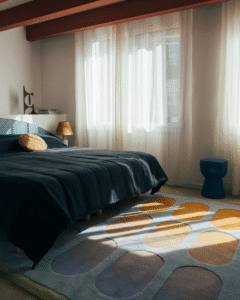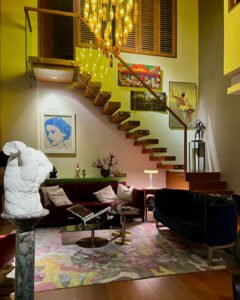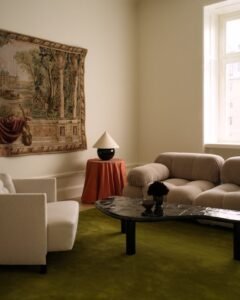

Custom rugs are often inspired by artwork, patterns, or graphic designs created by designers and artists. Turning artwork into a custom rug allows interior designers, brands, and property developers to create unique floor pieces that perfectly match their design concept.
But how exactly does a piece of artwork become a finished rug?
In this guide, we will walk through the process of transforming artwork into a custom rug, from the initial design file to the final production.
Step 1: Preparing the Artwork
The first step in creating a custom rug is preparing the artwork or design file. Designers typically provide artwork in formats such as:
AI (Adobe Illustrator)
PSD (Photoshop)
PDF
High-resolution PNG or JPG
Vector files such as AI or PDF are often preferred because they allow manufacturers to clearly see shapes, color blocks, and pattern details.
If the artwork is not in vector format, the design can usually be recreated or adjusted during the production preparation stage.
Step 2: Converting Artwork Into a Rug Design
Once the artwork is received, the design must be adapted for rug production.
Unlike digital graphics, rugs are made with yarn, which means the design needs to be converted into a structure that can be manufactured. During this stage, the design team will:
Adjust line thickness for yarn production
Simplify overly complex details if necessary
Define color areas clearly
Plan the pile height and texture
For hand tufted rugs, the design is typically translated into a production drawing that guides the tufting process.
Step 3: Color Matching and Material Selection
The next step is selecting the right materials and matching the colors from the artwork.
Custom rugs can be produced using a variety of materials, but premium projects often use New Zealand wool because of its softness, durability, and excellent color absorption.
During this stage, the manufacturer will:
-
Match yarn colors to the artwork palette
-
Suggest suitable materials
-
Decide the best pile structure for the design
Accurate color matching is essential to ensure the finished rug reflects the original artwork as closely as possible.
Step 4: Creating a CAD or Production Layout
Before production begins, the artwork is converted into a technical rug layout or CAD drawing. This drawing defines:
Exact rug dimensions
Color sections
Pattern placement
Pile heights
The CAD file allows designers and clients to review the design before production starts.
At this stage, adjustments can still be made to improve the balance and visual impact of the rug.
Step 5: Sampling (Optional but Recommended)
For large projects or complex designs, creating a sample is often recommended.
A sample allows designers to review:
Texture and material feel
Color accuracy
Pattern clarity
Overall design appearance
Sampling ensures the final rug will meet the expectations of the interior project.
Step 6: Rug Production
Once the design and materials are confirmed, the rug production process begins.
For hand tufted rugs, skilled artisans use a tufting gun to insert yarn into the backing fabric according to the design layout. After tufting, the rug goes through several finishing processes including:
Latex backing application
Carving and detailing
Surface finishing
Quality inspection
These steps ensure the rug matches the approved artwork and meets production standards.
Step 7: Final Finishing and Delivery
After production is completed, the rug undergoes final finishing and inspection.
This includes:
Cleaning and trimming
Edge finishing
Packaging for shipping
The finished custom rug is then ready to be delivered to the client or project site.
Turning Creative Ideas Into Custom Rugs
Transforming artwork into a custom rug is both a creative and technical process. With the right design preparation and manufacturing expertise, almost any artwork or pattern can be translated into a unique rug.
Custom rugs allow designers to bring their artistic ideas directly into interior spaces, creating a strong visual statement while maintaining the functionality of a floor covering.
At Gantely, we work closely with designers and project teams to transform artwork into high-quality custom rugs using premium materials and professional manufacturing techniques.
If you have artwork or a design concept that you would like to turn into a custom rug, feel free to contact our team to discuss your project.
👇